
Make It Make Sense
Why Does Every Moisturizer Seem to Break Me Out?
Answered by Jean, Nurse Practitioner Strategist | Live Pretty Wellness
The Clear Answer
A moisturizer can contribute to breakouts in some people — but a breakout that happens while you are using a moisturizer does not automatically prove that the moisturizer caused it.
Acne lesions develop over time, and your skin is experiencing your moisturizer alongside cleansers, acne treatments, sunscreen, makeup, hair products, hormones, friction, and whatever else is happening in your routine.
The useful question is not just: "Is this moisturizer bad for acne?"
It is: "What changed, when did the bumps appear, what do they look and feel like, where are they happening, and what else is my skin experiencing?"
Before you blame the moisturizer, read the pattern.
Moisturizer can be especially important when acne treatments are drying or irritating. The American Academy of Dermatology notes that moisturizer can help skin tolerate treatments including benzoyl peroxide, salicylic acid, topical retinoids such as tretinoin, and isotretinoin.[1]
The goal is not to avoid moisturizer at all costs.
The goal is to find a moisturizing strategy your acne-prone skin can tolerate.
Can Moisturizer Actually Cause Breakouts?
Yes, a skincare product can contribute to acne in some people.
Products applied to the skin can sometimes contribute to acne in some people. When choosing skincare, dermatologists commonly recommend looking for products labeled “non-comedogenic” or “won’t clog pores.”[2] But those labels are selection tools—not personalized guarantees.
But those labels are not a personalized guarantee. A product that works well for many people with acne-prone skin may still not work well for every individual. And seeing a breakout after starting a moisturizer does not automatically establish causation.
Possible cause and proven cause are not the same thing.
Why Can It Feel Like Every Moisturizer Is the Problem?
There are several possibilities worth investigating before concluding that moisturizing itself is the issue.
1 Acne Was Already Developing
A blemish appearing shortly after a new product is introduced may have begun developing before that product was applied. Timing matters.
2 Multiple Things Changed
A new moisturizer may have arrived alongside:
- a new cleanser
- tretinoin
- salicylic acid
- benzoyl peroxide
- exfoliation
- sunscreen
- makeup
- hair products
- changes in treatment frequency
When several variables change, assigning blame becomes difficult.
3 Irritation May Be Entering the Picture
Burning, stinging, redness, tenderness, itching, scaling, or significant dryness may suggest that irritation needs to be considered as part of what is happening — which is a different question from whether pores are clogging.
4 The Formulation May Not Suit the Individual
Moisturizers contain combinations of humectants, emollients, occlusives, preservatives, and other ingredients.[5] The whole formulation matters — not one viral "pore-clogging" ingredient list.
5 Something Else May Be Contributing
Acne can be influenced by factors beyond one moisturizer, including:
- the rest of the skincare routine
- hair products contacting the skin
- makeup
- friction and occlusion
- acne treatment adherence and tolerance
- underlying acne activity
Before You Blame the Moisturizer, Read These 5 Clues
You are not looking for a verdict. You are looking for a pattern.
1 Timing
Ask:
- When did you start the moisturizer?
- When did the bumps actually become noticeable?
- Did anything else change around the same time?
A temporal association matters, but timing alone does not prove causation.
"After" does not always mean "because of."
2 Pattern
Ask:
- Where are the new bumps?
- Are they appearing in your usual acne-prone areas?
- Are they concentrated where a product is applied more heavily?
- Are they near the hairline, jawline, forehead, or another recurring area?
Location and distribution can provide useful clues, but they do not diagnose the cause by themselves.
3 What Does Your Skin Feel Like?
Is this only acne? Or are you also experiencing:
- burning
- stinging
- itching
- tightness
- tenderness
- redness
- scaling
- unusual dryness
Those symptoms change the question. What looks like "my moisturizer is breaking me out" may sometimes involve irritation or another skin reaction that deserves a closer look.
4 What Else Is in the Routine?
Take an inventory:
- cleanser
- tretinoin or another retinoid
- benzoyl peroxide
- salicylic acid
- azelaic acid
- exfoliating acids
- spot treatments
- sunscreen
- makeup
- hair products
- other prescriptions
Your skin does not experience moisturizer in isolation. If the routine is already aggressive or difficult to tolerate, the moisturizer may be getting blamed for a problem created by the total routine.
If tretinoin is part of that routine, Why Am I Still Breaking Out on Tretinoin? works through that side of the picture.
5 What Happens When the Routine Becomes Simpler?
When troubleshooting, changing several products repeatedly can make the pattern harder to interpret. A clinician may sometimes simplify variables when evaluating what is contributing to a skin reaction or acne pattern.
That is a decision to make with the professional managing your care — not a reason to stop a prescribed medication on your own.
You cannot troubleshoot five moving targets at once.
Why Am I Breaking Out Even With a “Non-Comedogenic” Moisturizer?
"Non-comedogenic" means a product is intended to be less likely to clog pores. It does not mean that no person will ever develop acne, bumps, or irritation while using it.
Acne is multifactorial. The label can be useful when selecting products for acne-prone skin, and dermatology guidance commonly recommends non-comedogenic products.[4]
But the label does not tell you:
- whether another product is contributing
- whether your acne was already developing
- whether irritation is present
- whether your overall routine is tolerable
- whether this particular formulation works well for you
Non-comedogenic is useful information. It is not a personalized guarantee.
Is One “Pore-Clogging” Ingredient Causing My Acne?
You usually cannot determine whether a moisturizer caused your acne simply by finding one ingredient on an online comedogenicity list.
The finished formulation matters. So does:
- ingredient concentration
- the vehicle the ingredient sits in
- how the product is used
- how your individual skin responds
Moisturizer formulations combine humectants, emollients, and occlusives in different proportions, and the same ingredient can behave differently across products.[5]
Online ingredient checkers may be useful for reading labels, but they cannot diagnose why you are breaking out.
Do I Even Need Moisturizer If I Have Acne?
Often, yes — especially if your acne treatment is drying or irritating your skin.
The American Academy of Dermatology notes that acne treatments such as benzoyl peroxide, salicylic acid, adapalene, tazarotene, tretinoin, and isotretinoin can dry or irritate skin, and moisturizer can help improve treatment tolerance.[1]
Avoiding moisturizer because you are afraid of breakouts can create a different problem if the rest of your routine leaves your skin persistently dry and uncomfortable.
Acne-prone does not mean moisture-free.
What About Gel Moisturizers vs Cream Moisturizers?
Texture alone does not tell you whether a moisturizer will work for your acne-prone skin.
A gel may feel lighter. A cream may feel richer. But "gel" does not automatically mean acne-safe, and "cream" does not automatically mean pore-clogging.
Look at:
- the full formulation
- how much you use
- how dry your skin actually is
- treatment-related irritation
- climate and environment
- how the product performs within the total routine
How Do I Know If the Moisturizer Really Is the Problem?
Look for a repeatable pattern rather than assuming causation from one breakout.
Useful clues may include:
- timing
- location
- reproducibility
- whether symptoms improve when variables change
- whether the same reaction occurs again
- whether irritation accompanies the bumps
- what other products were introduced or changed
If the pattern remains unclear, repeated product switching may create even more confusion. This is where individualized evaluation can be useful.
Could My Acne Treatment Be Why Moisturizer Suddenly Feels Different?
Yes. Acne treatment can change what your skin needs and tolerates.
Treatments including topical retinoids, benzoyl peroxide, salicylic acid, and isotretinoin can contribute to dryness and irritation.[1] That means a moisturizer should be evaluated within the treatment plan — not separately from it.
A moisturizer that felt unnecessary before treatment may become useful during treatment. And a routine that previously felt comfortable may need a different moisturizing strategy once acne treatment changes.
Where Moisturizer Fits Into Jean's Bigger Picture
Jean does not look at moisturizer as simply "good" or "bad" for acne.
Jean's Healthy Skin Triad considers Healthy Skin Balance, Healthy Skin Barrier, and Healthy Pore Care, with Clear Skin at their intersection.
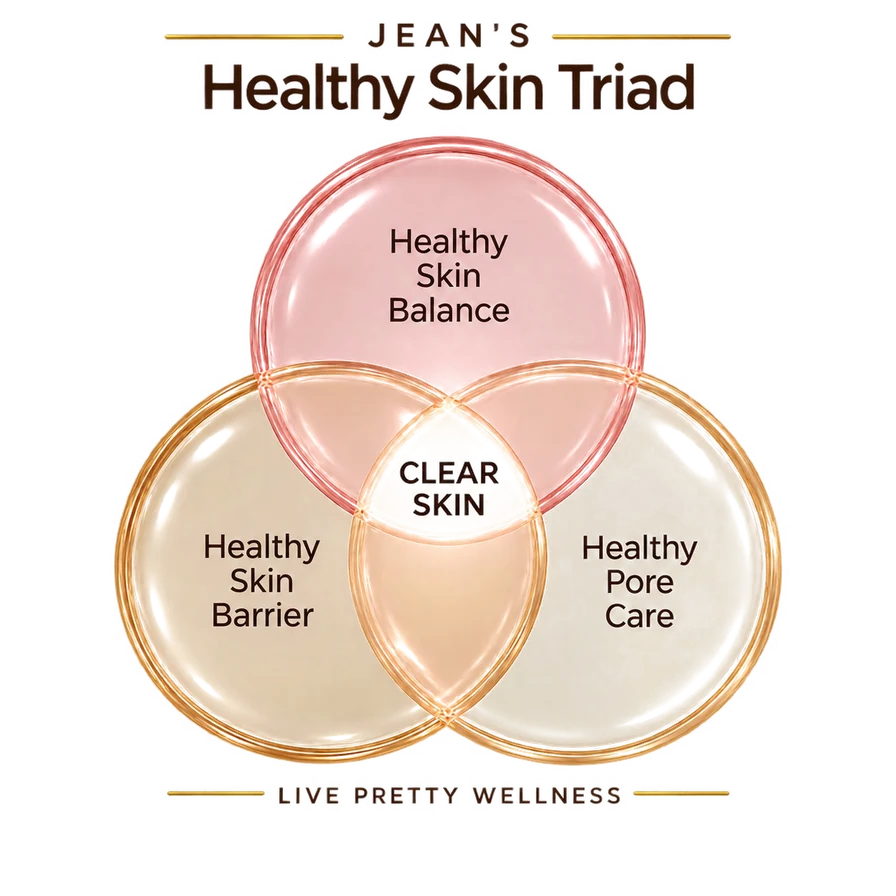
Moisturizer can support comfort and treatment tolerance, but the formulation still has to make sense within an acne-prone routine.
The goal is not "use the lightest moisturizer possible." And it is not "use the richest moisturizer possible."
The goal is to find the level and type of support your skin needs without losing sight of pore care, treatment tolerance, and the rest of the routine.
Jean’s “Is It Really the Moisturizer?” Check
Before adding another moisturizer to the reject pile, ask:
- TimingWhen did the bumps appear relative to starting it?
- PatternWhere are they appearing, and is that typical for my acne?
- FeelIs there burning, stinging, itching, redness, tightness, or scaling too?
- ChangesWhat else changed around the same time?
- RoutineWhat acne treatments and other products are already affecting my skin?
- RepeatIs there a consistent, repeatable pattern — or am I assuming the newest product caused it?
Don't just read the ingredient list. Read the skin.
When “My Moisturizer Breaks Me Out” Deserves a Closer Look
Consider individualized evaluation when:
- breakouts are persistent or worsening
- acne is painful or deep
- scarring is occurring or becoming more likely
- significant burning, stinging, itching, redness, swelling, tenderness, or scaling develops
- reactions occur repeatedly with multiple products
- you cannot tolerate moisturizer while using acne treatment
- you cannot determine whether the problem is acne or another reaction
- the routine contains several actives or prescriptions
- you keep replacing products without understanding the pattern
- the diagnosis itself is uncertain
Live Pretty Wellness provides education and individualized skincare strategy. It does not replace urgent or specialist medical care.
Jean's Bottom Line
If every moisturizer seems to break you out, stop treating every new bump as proof that moisturizing is the problem.
Ask:
- What changed?
- When did it change?
- Where are the bumps?
- What does the skin feel like?
- What else is in the routine?
- Is the pattern repeatable?
The goal is not to find a moisturizer with a perfect internet ingredient score. The goal is to understand what your skin is actually responding to.
Want Jean's Help Making Sense of Your Skin?
When every moisturizer, treatment, and ingredient starts feeling like a possible culprit, it can become difficult to tell what your skin actually needs.
Get a Personalized Skincare StrategyWant to Meet Jean First?
Meet Jean Live — Free Q&ASources
- American Academy of Dermatology. Moisturizer: Why you may need it if you have acne. View resource (aad.org, opens in a new tab)
- American Academy of Dermatology. 10 skin care habits that can worsen acne. View resource (aad.org, opens in a new tab)
- American Academy of Dermatology. Adult acne. View resource (aad.org, opens in a new tab)
- Reynolds RV, Yeung H, et al. Guidelines of care for the management of acne vulgaris. Journal of the American Academy of Dermatology. 2024;90(5):1006.e1–1006.e30. View on PubMed (opens in a new tab)
- Chularojanamontri L, Tuchinda P, Kulthanan K, Pongparit K. Moisturizers for Acne: What are their Constituents? Journal of Clinical and Aesthetic Dermatology. 2014;7(5):36–44. View on PMC (opens in a new tab)
Jean's own perspectives and frameworks above are her clinical reasoning, not claims attributed to these sources.

Jean
Nurse Practitioner Strategist
Founder, Live Pretty Wellness
Jean combines clinical reasoning with practical skincare strategy to help people make sense of acne-prone skin, prescriptions, skincare, skin response, and goals as parts of one picture.
About JeanYou May Be Wondering Next…
- Why Does My Acne Keep Coming Back?
- Why Am I Still Breaking Out on Tretinoin?
- Can I Use Azelaic Acid With Tretinoin?
- Can I Use Salicylic Acid With Tretinoin?
- Why Do I Keep Breaking Out in the Same Spot?
- How do I fade dark spots without breaking out again?
- Is my skin barrier damaged — or am I just breaking out?
- Is this fungal acne — or regular acne?
- Could my hair products be causing my acne?
More answers are coming.
Back to Make It Make Sense